
As a Travel Manager responsible for executive mobility programs, you face daily decisions that balance several key priorities: delivering reliable, on-time transfers; ensuring high levels of passenger comfort and productivity; maintaining fleet uptime and cost control; meeting corporate sustainability and ESG reporting requirements; and aligning with travel policies and executive expectations.
The ongoing shift toward electrification makes these choices more important than ever. Battery electric vehicles (BEVs) accounted for nearly 19% of new registrations in Europe, the highest percentage recorded to date, with sustained growth over the previous year. Hybrid-electric vehicles (non-plug-in) remained the most popular category at 34.5% of the market, while plug-in hybrids (PHEVs) held around 9% in various reports, meaning more than half of new registrations featured some level of electrification. Globally, PwC analyses indicate that BEV sales in the first half of 2025 reached a record 16% market share in analyzed markets, with China driving much of the volume and quarterly shares occasionally exceeding 20% in late 2025.
These trends are directly influencing chauffeur-driven services. In premium segments—such as Mercedes S-Class/EQS, BMW 7 Series/i7, Audi A8/e-tron GT equivalents—the fundamental standards for comfort, safety, interior quality, and advanced driver assistance are consistently excellent regardless of propulsion type. What separates the options are the practical differences in real-world executive use: ride characteristics during work or rest, operational predictability on varied routes, maintenance and availability impacts, emissions contributions to scope 3 reporting, and how well each fits typical program destinations and schedules.
Onboard passenger experience and productivity
Executive transfers frequently serve as extensions of the workday—time for calls, reviewing materials, resting, or preparing for meetings. In top-tier combustion sedans and limousines, manufacturers have invested heavily in acoustic engineering, multi-layer glazing, active noise cancellation, and chassis tuning to create extremely quiet, vibration-free cabins. During inter-city rides such as the Boston-to-New York route, road and wind noise are the dominant sounds, with any engine or drivetrain presence kept to a minimum that rarely, if ever, disrupts concentration, confidential conversations, or phone/video calls in standard executive scenarios.
Electric vehicles take cabin serenity to another level by eliminating the powertrain entirely. There is no engine noise, no transmission shifts, and no mechanical vibrations from combustion components. The primary sounds come from tires on the road and ambient wind, often resulting in a noticeably calmer environment that many executives describe as more conducive to focused work, especially during extended transfers or in stop-and-go traffic. The floor-mounted battery pack lowers the center of gravity, contributing to a more stable, planted feel through corners and during acceleration, with instant, linear torque delivery that feels smooth and predictable.
Plug-in hybrids offer a versatile middle ground. They provide full-electric, near-silent operation for urban and short-distance segments (typically 20–50 miles of electric range in premium models, depending on battery size and driving conditions), then transition seamlessly to the combustion engine for longer highways or when range is needed.
The switch is engineered to be imperceptible to the passenger, preserving ride refinement throughout. In mixed urban-highway itineraries common in executive travel, plug-in hybrids frequently deliver productivity benefits close to those of pure electrics while retaining the extended range and familiarity of combustion.
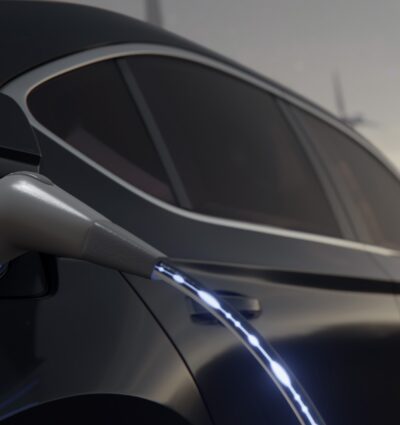
Punctuality and operational risk management
Punctuality remains one of the most critical metrics in executive services—delays of even a few minutes can cascade into missed connections, rescheduled meetings, or reduced executive satisfaction. Combustion vehicles continue to set the standard for operational simplicity and low risk: Refueling takes 5–10 minutes at widely available stations, and infrastructure coverage is virtually universal, even in secondary cities or rural corridors. Timing depends almost entirely on traffic, routing, and driver planning.
Electric vehicles require more structured planning around energy management. In densely populated European hubs (Amsterdam, Munich, or Paris) and many major North American metropolitan areas, public fast-charging networks are reliable and dense enough for most airport-to-hotel or intra-city transfers, with minimal added risk when schedules allow short stops. However, on intercity routes, in regions with sparser coverage, or during peak demand, charger availability, downtime, or queues can necessitate built-in time buffers of 15–30 minutes for critical legs.
As of early 2026, networks continue to expand rapidly, but uniformity remains stronger in Europe than in parts of North America or Latin America, where major capitals show progress but inter-city corridors can still be uneven.
Hybrids, especially plug-ins, significantly reduce these variables. They operate in electric mode where charging infrastructure supports it (delivering zero local emissions and quiet performance), then default to combustion without interrupting the journey or requiring stops. This dual capability provides electric advantages in well-served areas and combustion-level flexibility elsewhere, making hybrids a strong choice for programs operating across mixed geographies or with tight, non-negotiable timings.
Maintenance and fleet uptime
Consistent vehicle availability is essential for service reliability and controlling total cost of ownership. Combustion models rely on mature, well-understood mechanical systems with scheduled maintenance intervals (oil, filters, spark plugs, etc.) that are predictable and supported by extensive service networks worldwide. Downtime is manageable with proper planning.
Electric drivetrains eliminate many traditional wear items—no oil changes, fewer brakes due to regenerative systems, no exhaust components—leading to lower routine maintenance requirements and often higher fleet availability (frequently 95%+ in professionally managed programs). Premium manufacturers back batteries with long warranties (typically 8–10 years or 100,000+ miles), and thermal management systems have matured to minimize degradation risks over standard fleet cycles.
Hybrids incorporate both architectures, so maintenance is more comprehensive than pure electrics but includes redundancy: If the electric system needs attention, the combustion engine can often sustain operation. The dual complexity requires slightly more specialized service, but strong partnerships with providers who use predictive diagnostics help keep vehicles on the road consistently.

Emissions and ESG alignment
Transportation contributes significantly to corporate scope 3 emissions, and executive ground travel is a visible, reportable component. A premium combustion diesel typically produces 240–290 g CO₂ per mile (varying by model, load, and conditions), which accumulates meaningfully in high-frequency programs and factors into annual sustainability disclosures. Electrics generate zero tailpipe emissions during use, with lifecycle benefits greatest in regions with high renewable energy penetration (e.g., parts of Scandinavia, France, or increasingly other European grids). Hybrids achieve substantial reductions in urban and mixed driving by maximizing electric operation, often cutting emissions by 20–50% compared to equivalent combustion models depending on usage patterns.
Choosing appropriately helps lower reported figures, support decarbonization commitments (such as Science-Based Targets), and demonstrate alignment with corporate values—particularly when an executive arrives at a board meeting, investor presentation, or industry conference in a low- or zero-emission vehicle.
Scenario-based application
- Short airport-to-hotel or intra-city transfers in major European or U.S. cities: Electrics stand out for their exceptional quietness, zero local emissions, and smooth ride, provided charging access is dependable (as it generally is in these locations).
- Long intercity runs with tight schedules: Combustion or plug-in hybrids offer the greatest predictability and range confidence, minimizing any need for energy-related adjustments.
- Full-day urban or multi-stop schedules: Electrics or plug-in hybrids excel at keeping emissions low while maintaining a calm, productive cabin environment throughout the day.
A decision influenced by factors besides the vehicle
In premium segments, all three propulsion types deliver outstanding levels of luxury, safety, and technology. The optimal selection for your program depends on a clear evaluation of your most frequent destinations and infrastructure realities, your organization’s sustainability targets and reporting needs, travel policy guidelines, executive feedback on ride preferences, and total cost modeling (including fuel/charging, maintenance, and downtime).
Tools such as TCO calculators, real-time charger network maps, regional emission factors, and fleet analytics help quantify the trade-offs and support recommendations that strengthen the overall value of your executive mobility function. This approach ensures your choices contribute to operational excellence, risk control, and strategic consistency across the board.