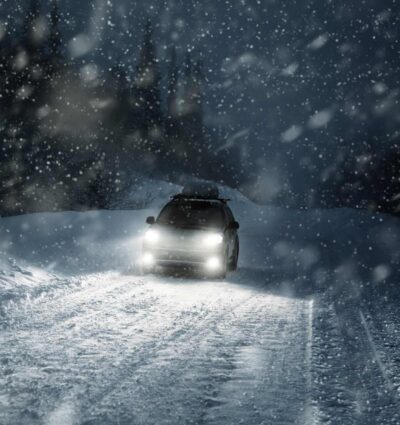
At the world’s best ski destinations, comfort and satisfaction are not defined solely by altitude, snow, or hotel category. At this level, excellence is measured by something much less visible but infinitely more decisive: the ability to move people with absolute certainty in environments where conditions are unpredictable and margins for error no longer exist.
Winter is unforgiving. Roads close without warning, the weather is capricious, flights are delayed, and access routes that seem simple on paper can become operational bottlenecks in a matter of seconds. In this context, the difference between a standard transfer and a truly seamless experience lies not in the vehicle, nor even in the destination itself, but in the precision with which mobility is planned, executed, and continuously monitored.
It is not a question of comfort. It is a question of system design.
When conditions change, precision must not
Ice, snowfall, visibility restrictions, and extreme temperatures introduce layers of complexity that simply do not exist in other seasons. A ten-minute delay can result in missed airport slots, friction during hotel check-in, or unmet traveler expectations. A closed mountain road can instantly invalidate a carefully planned itinerary. Under these conditions, improvisation is a liability.
True winter mobility requires systems specifically designed to perform under pressure. These systems must anticipate disruptions, monitor risks in real time, and adapt instantly without transferring stress or uncertainty to the passenger. At the highest level of service, customers should never feel the complexity beneath the surface. They should only experience continuity, control, and peace of mind.
Three destinations, three operational realities
Courchevel, Aspen, and St. Moritz are among the world’s most exclusive seasonal destinations. Although they are often grouped together as elite ski enclaves, each operates on a fundamentally different logistical logic. Understanding those differences and building operational structures around them is what distinguishes generic transportation from true high-precision mobility.
Courchevel 1850: access as a technical challenge
Courchevel 1850 occupies the highest and most exclusive point of Les Trois Vallées, the world’s largest interconnected ski area. Its altitude and geographical configuration create particularly challenging access conditions during the winter months. The ascent involves sharp bends, steep gradients, and limited road width, all of which are made considerably more difficult by snow and ice.
The resort’s exclusivity is reinforced by its airport, Courchevel Altiport (LFLJ), one of the most technically challenging ones in the world. With a short, sloping runway and no conventional approach, operations are entirely dependent on weather conditions and visibility. Flights are often subject to last-minute changes, delays, or diversions.
In this environment, ground logistics cannot function independently of air transportation. Transfers must be synchronized with flight operations, weather forecasts, road conditions, and hotel protocols. Vehicles must be equipped for winter to the highest standards, but more importantly, chauffeurs must be trained to manage dynamic risks, make informed decisions under pressure, and maintain continuous communication with operations teams and FBOs.
Here, success is defined by the absence of friction. The traveler should never perceive the complexity of the mountain; they should simply arrive comfortably and having enjoyed the journey.
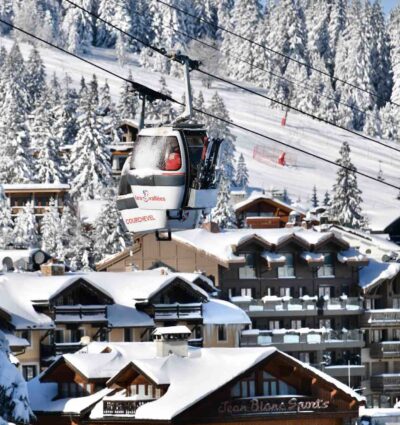
Aspen: speed, volatility, and constant change
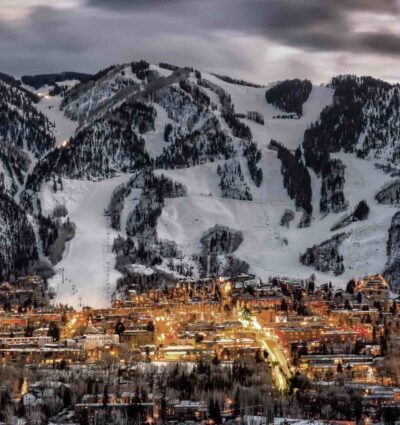
Aspen presents a very different operational challenge. Located at an altitude of 7,900 feet in Colorado, with surrounding peaks exceeding 9,800 feet, Aspen combines extreme weather variability with an infrastructure designed for high-profile travelers operating on tight schedules.
Winter conditions in Aspen can change dramatically in a matter of minutes. Heavy snowfall, sudden wind shifts, and temperature drops to −4 °F are not exceptions but part of normal operations. Access routes between Aspen, Snowmass Village, and the surrounding residential areas are highly sensitive to these conditions, and temporary road closures are common.
In Aspen, time is precious but also volatile. Travel times can change rapidly, so decisions must be made proactively rather than reactively. Mobility here requires constant monitoring, predictive planning, and the ability to reroute or adjust schedules without compromising reliability.
What defines excellence in Aspen is not just speed, but the ability to maintain schedule integrity in an environment where conditions evolve more rapidly than in most European resorts.
St. Moritz: precision as a cultural norm
St. Moritz operates within a unique ecosystem. Located in the Engadine Valley at an altitude of 5,977 feet, it benefits from a stable microclimate with over 300 days of sunshine per year. However, this apparent stability does not reduce operational complexity but rather increases expectations.
Major hotels, such as Badrutt’s Palace, the Kulm Hotel, Suvretta House, and the Carlton Hotel, operate with highly structured coordination protocols. Guests often arrive by private jet, transfers are tightly scheduled, and tolerance for delays is virtually nonexistent. Events, seasonal peaks, and the arrival of VIPs add even more demands.
In St. Moritz, mobility is not a secondary logistical issue. It is an integral component of the destination. Every detail, from arrival time to route selection, must align perfectly with the overall experience.
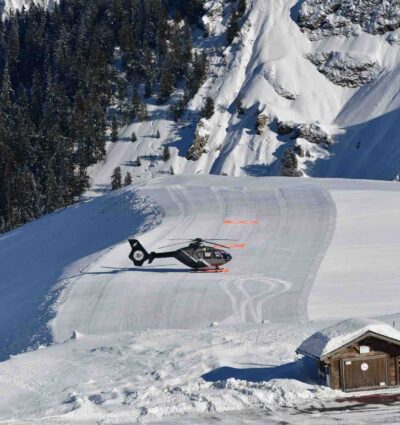
Operating in winter is a discipline, not a feature
Providing premium ground transportation in winter conditions is not about adding options or upgrading vehicles. It is about operating within a disciplined framework designed specifically for extreme environments.
At the center of that framework is the chauffeur, not as a driver, but as a skilled operator. Winter chauffeurs must be prepared through:
- Advanced training in driving on ice and snow.
- Real-time risk assessment and decision-making.
- Proactive coordination with FBOs, flight crews, hotels, and operations teams.
- Strict adherence to protocols designed to eliminate uncertainty rather than manage its consequences.
Technology supports this process, but it does not replace judgment. Systems provide visibility and control; people execute with precision and accountability.
Why does winter leave no room for error?
Winter magnifies every slip-up. A small miscalculation can quickly turn into a significant disruption, not only for the passenger but for the entire operational chain. That’s why successful winter mobility depends on clearly defined processes, continuous communication, and an unwavering commitment to precision.
This level of service cannot be improvised, casually scaled, or replicated without deep operational knowledge. It requires experience, structure, and a culture that understands responsibility as something integral, not segmented.
The true meaning of luxury in winter travel
Ultimately, passengers do not evaluate winter transfers based on leather seats or vehicle brands. They evaluate certainty, whether arrivals are seamless, schedules are respected, conditions are anticipated, and responsibility is clearly assumed from the moment the plane lands to the moment they reach their destination.
Courchevel, Aspen, and St. Moritz each demand a different operational structure, but they all share the same fundamental truth: in winter, the journey is as important as the destination itself.
True luxury is not where you ski but in the precision, reliability, and peace of mind with which you get there. And in environments where winter tests every link in the chain, excellence on the ground must be executed with the same standards of precision as private aviation.
Because the experience does not begin on the slopes but the moment the plane lands.