By Joshua Biondi, Business Expansion Manager
Formula 1 is often sold as a luxury experience. In practice, race weekend success is rarely determined by the quality of the VIP hospitality package or the proximity of a hotel to the circuit. More often, it depends on many details working together: airport arrivals, hotel departures, circuit access, traffic management, restaurant reservations, and contingency planning.
July offers a perfect illustration of this reality. Within a four-week period, the Formula 1 calendar moves through three very different environments: Silverstone, Spa-Francorchamps, and Hungaroring. All three are premium events attracting VIP guests. Yet from a mobility perspective, they have almost nothing in common.
Planning each race around its real pressure point is what keeps the weekend under control.
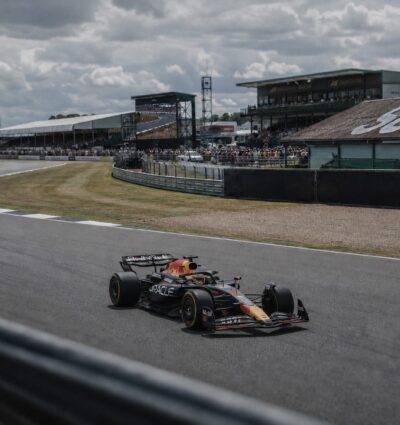
British Grand Prix (Silverstone, 3—5 July)
At roughly 66 miles from London, many first-time visitors assume Silverstone’s main challenge is distance. In reality, the greater issue is the volume of traffic moving toward the circuit throughout the weekend.
The British Grand Prix attracts hundreds of thousands of spectators over four days, creating sustained pressure on roads, parking facilities, shuttle systems, and access routes throughout the entire weekend. Unlike many sporting events where Sunday carries most of the operational weight, Silverstone’s Sprint format means Friday and Saturday require almost the same level of planning.
For travel and event organizers, another layer of complexity is that guests rarely stay in the same place. Some prefer London, while others choose Birmingham. Corporate groups often split across multiple hotels, while private aviation passengers may arrive through any of the different London airports.
The result is a mobility environment where coordination becomes more important than raw driving time. Typical challenges include:
- Guests departing from different hotels on the same schedule.
- Significant variations in journey times throughout the weekend.
- Post-race traffic affecting dinner reservations, airport transfers, and onward travel.
- Multiple arrivals and departures requiring continuous vehicle coordination.
The most common mistake is assuming that a standard transfer strategy will work. At Silverstone, transportation needs to be managed as an ongoing service throughout the weekend rather than as a series of individual trips.
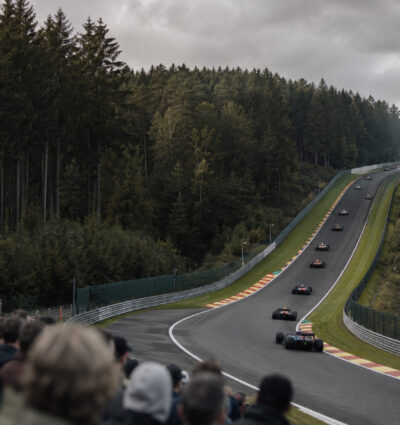
Belgian Grand Prix (Spa-Francorchamps, 17—19 July)
If Silverstone is defined by volume, Spa-Francorchamps is defined by geography. The Belgian Grand Prix is frequently associated with Brussels, but the circuit sits deep within the Ardennes region (about two hours from the Belgian capital). Treating Spa-Francorchamps as a city-based event can quickly create planning challenges.
Unlike destinations where hotels naturally cluster around the venue, attendees to Spa-Francorchamps may be spread across Brussels, Maastricht, Luxembourg, or smaller towns throughout the region. Two guests attending the same race may begin their day from completely different logistical realities.
Therefore, the real difficulty lies in coordinating reliable movement between airports, hotels, hospitality areas, and evening commitments.
Additional considerations include:
- Long approach routes from major cities.
- Limited flexibility once traffic builds around the circuit.
- Rapid weather changes, common to the Ardennes region.
- Different arrival requirements for attendees, sponsors, and private groups.
- Return journeys that frequently take longer than anticipated.
Spa-Francorchamps rewards preparation more than almost any other race on the European calendar. A well-structured transportation plan allows passengers to enjoy one of Formula 1’s most iconic circuits without having to deal with the logistics of getting there and back.
Hungarian Grand Prix (Hungaroring, 24—26 July)
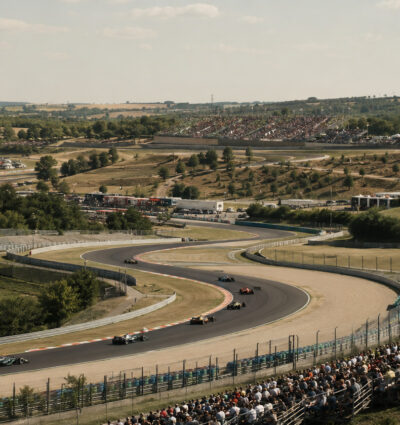
On paper, Hungaroring appears to be the simplest of the three July races. Budapest is a city well equipped for high-end visitors, with a strong selection of five-star hotels and a circuit located relatively close to the city, yet appearances can be misleading.
The challenge at Hungaroring is timing. Most guests stay in central Budapest, creating a predictable pattern of race-morning departures and post-race returns. The result is a mobility environment where small delays can quickly create larger disruptions throughout the day. For attendees, executives, and family groups, arriving thirty minutes late can have a greater impact than adding thirty minutes to the journey itself.
Other common pressure points include:
- Coordinating departures from multiple city-center hotels.
- Managing airport arrivals on race weekend.
- Balancing restaurant reservations with circuit schedules.
- Avoiding post-race bottlenecks during peak departure periods.
Unlike Spa-Francorchamps, where distance and location are the main challenges, Hungaroring rewards precision. Success often comes from controlling timing rather than reducing distance.
Three different circuits with three different mobility profiles
Although all three races sit under the Formula 1 umbrella, they create remarkably different transportation requirements.
| Circuit | Primary challenge | Typical mistake | What improves the experience |
| Silverstone | Volume and congestion. | Assuming travel times remain consistent throughout the weekend. | Continuous chauffeur coordination and flexible scheduling. |
| Spa-Francorchamps | Geography and hotel dispersion. | Treating it as a city-based event. | Long-distance route planning and regional expertise. |
| Hungaroring | Timing and schedule consistency. | Underestimating race-day traffic patterns. | Precise departure planning and schedule protection. |
In practice, Formula 1 transportation cannot be standardized, and each circuit demands a different approach.
What Travel Managers should expect from ground transportation
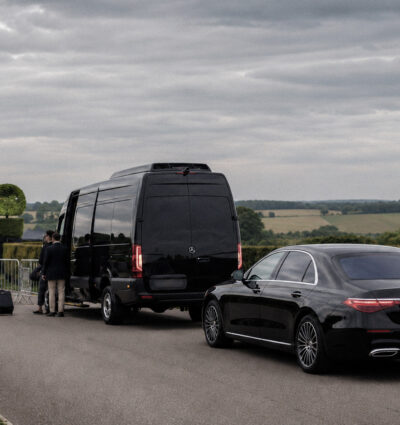
Regardless of the circuit, several requirements remain constant. Ground transportation should provide:
- Flight monitoring and schedule flexibility.
- Continuity between airport, hotel, circuit, and evening engagements.
- Premium vehicle options for families, corporate teams, and larger groups.
- Professional chauffeurs familiar with local access patterns and event logistics.
- Discretion appropriate for executives, sponsors, and high-profile travelers.
- A single point of coordination throughout the journey.
Most importantly, transportation should reduce uncertainty rather than create additional variables. This means fewer issues to solve when the weekend is underway, which is exactly what travel and event organizers need.
Formula 1 race weekends leave little room for improvisation. Flights, hotel departures, hospitality access, and post-race returns all need to work together, which makes transportation one of the most important parts of the plan.
A premium chauffeur service protects schedules and absorbs complexity before it reaches the client. At Silverstone, that means managing volume; at Spa-Francorchamps, geography; and at Hungaroring, timing.
The circuit may be the reason your guests travel, but the journey is what determines how the experience begins and ends.