By Marta Brió, Luxury Travel Specialist
Fashion has always been closely connected to place. Certain silhouettes belong naturally to Paris, tailoring has a particular meaning in London, craftsmanship remains central to Milan, and New York continues to transform the energy of the street into a constantly evolving visual language. These associations are not simply the result of major fashion houses or seasonal runway shows. They reflect the history, architecture, creative communities, and social habits that have shaped each city over time.
For today’s luxury traveler, fashion has become one of the most rewarding ways to understand a destination. Shopping may still be part of the journey, but it is no longer the main purpose. A private fitting, an exhibition devoted to a designer, an independent atelier, or a hotel whose interiors embody the character of its neighborhood can reveal as much about a city as a traditional guided tour. For Travel Advisors and Concierges, the opportunity lies in designing trips where style becomes another way of experiencing local culture.
The Big Four beyond Fashion Week
New York, London, Milan, and Paris remain the natural starting points for fashion-focused travel, yet each offers a completely different interpretation of style. Understanding those differences is what transforms a shopping itinerary into a cultural one.
- In New York, fashion is inseparable from movement and reinvention. Fifth Avenue still represents the established face of luxury, but much of the city’s creative energy emerges elsewhere: in the boutiques of SoHo, the independent labels found in Brooklyn, and the constant dialogue between fashion, art, and popular culture. A thoughtfully curated itinerary might combine a museum exhibition with a private shopping appointment, a visit to an emerging designer’s studio, and dinner in a neighborhood that reflects the client’s personal interests rather than the city’s best-known addresses.
- London approaches fashion through contrast. Savile Row preserves generations of tailoring expertise, while Bond Street and Mayfair showcase the world’s leading luxury houses. Yet the city’s identity has always been shaped just as much by subcultures, music, and experimentation as by heritage. Visitors can experience that dialogue through bespoke tailoring, museum collections, independent galleries, and neighborhoods where creativity continues to redefine London’s sense of style.
- Milan presents fashion as part of a broader culture of craftsmanship. Clothing, furniture, architecture, and gastronomy all reflect the same appreciation for proportion, materials, and understated taste. While the Quadrilatero della Moda remains the city’s best-known destination for luxury shopping, a richer itinerary naturally extends to modernist villas, design studios, La Scala, and the daily ritual of aperitivo. Fashion here is part of everyday life, closely linked to design, hospitality, and the city’s sense of presentation.
- Paris offers perhaps the clearest example of fashion as cultural heritage. Rue Saint-Honoré, Place Vendôme, and Avenue Montaigne remain international references, yet the city’s relationship with style extends far beyond its boutiques. Museums, archives, ateliers, and historic hotels reveal how fashion has shaped (and continues to shape) Parisian identity. The most rewarding itineraries do not simply connect prestigious addresses. They show how couture, art, architecture, and everyday life continue to influence one another.
Across all four cities, the real attraction lies beyond access to luxury brands: it is the opportunity to understand why each destination has developed its own visual identity and cultural traditions. Fashion becomes less about acquisition and more about interpretation.
When the hotel becomes part of the story
In luxury travel, the choice of hotel can shape the entire stay. A property in the right neighborhood, with a strong design identity and a genuine connection to the city, becomes part of how the destination is experienced.
A historic palace in Paris echoes the traditions of couture and ceremony, while a contemporary property in Milan expresses the city’s appreciation for craftsmanship and design. A stay in Mayfair places guests within London’s tailoring heritage, whereas a hotel in Manhattan or Brooklyn offers a very different perspective on New York’s artistic energy. In each case, the property becomes another expression of the city’s identity.
Fashion and hospitality are also becoming increasingly intertwined. Designer hotels, branded residences, and carefully curated collaborations allow travelers to experience a fashion house through architecture, interiors, and service rather than clothing alone. A carefully chosen hotel, therefore, reinforces the story the destination is already telling.
Style capitals beyond the traditional four
Some of the most interesting fashion experiences now take place beyond the established capitals. Travelers who already know Paris, London, Milan, and New York are increasingly looking toward destinations where fashion feels more local, experimental, and closely connected to other creative disciplines.
- Tokyo combines luxury, craftsmanship, and street culture in a way few cities can match.
- Copenhagen has built an international reputation around understated design and sustainability.
- Cities such as Stockholm, Warsaw, and Lagos offer a different kind of discovery, where fashion evolves alongside architecture, music, art, and urban renewal.
What these destinations share is not a larger luxury retail scene but a stronger sense of authenticity. Their appeal lies in allowing travelers to discover local communities that still feel closely connected to everyday life rather than global luxury tourism.
Fashion travel requires room to move
Fashion-focused itineraries often appear straightforward. In reality, they require careful coordination behind the scenes. A fitting may last longer than expected, a showroom visit may be confirmed at short notice, and purchases may need to be collected or delivered later in the day. During Fashion Week, restaurants become meeting places, hotels become networking hubs, and traffic patterns change around shows and private events.
Travel Advisors and Concierges need to find the right balance between structure and flexibility. Clients should feel free to change their plans without feeling that the entire day depends on every individual transfer.
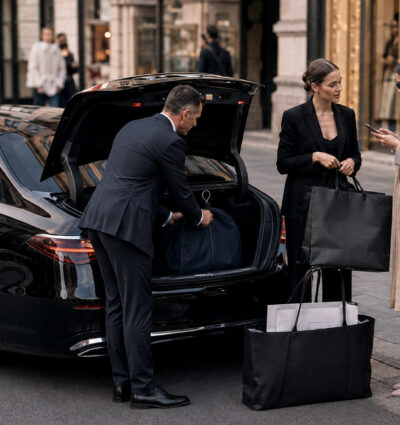
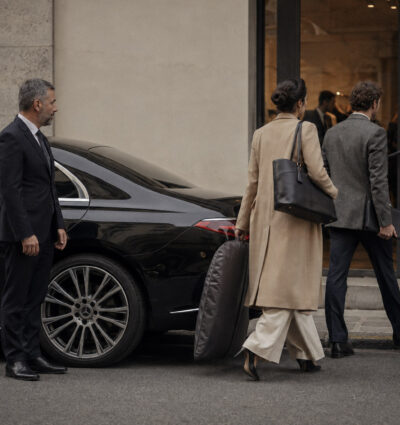
This is where mobility becomes part of the experience. A professional chauffeur who understands the itinerary, knows the appropriate entrances, and remains available between appointments allows the day to flow naturally. Vehicle selection also deserves careful thought, particularly when clients travel with assistants, stylists, or security professionals, or when garment bags and shopping purchases become part of the journey.
The value extends well beyond punctuality. Good ground transportation keeps the itinerary on track, allowing travelers to move from one experience to the next without constantly thinking about the logistics in between.
A more personal way to understand a city
Fashion travel works best when it reflects the traveler rather than the destination’s most recognizable names. One client may be interested in couture history and private appointments, while another prefers independent designers, vintage collections, or contemporary streetwear. Some will choose to visit during Fashion Week; others will discover far more by experiencing the city when its cultural life plays out at a slower pace.
The role of the Travel Advisor is therefore not simply to recommend fashionable places but to connect hotels, neighborhoods, ateliers, museums, and restaurants into an experience that feels coherent rather than carefully staged.
Looking at a destination through fashion reveals how local craftsmanship, architecture, artistic movements, and ideas about identity have developed over time. The most memorable journeys leave travelers with more than new purchases; they leave them with a deeper understanding of the place itself.