By Joshua Biondi, Business Expansion Manager
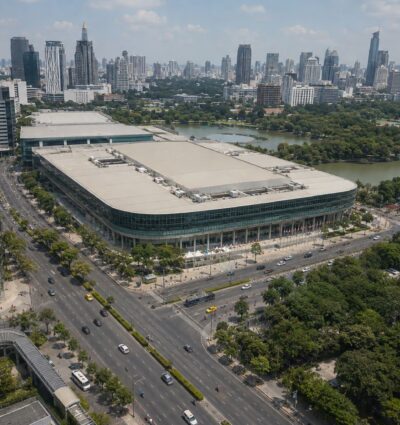
The IMF and World Bank Group Annual Meetings return to Bangkok from October 12 to 18, 2026, bringing finance ministers, central bank governors, senior executives, investors, and representatives of international institutions to the Thai capital. The meetings will take place at the Queen Sirikit National Convention Center (QSNCC), with delegations from the IMF’s 191 member countries expected to attend.
Many senior executives will spend only part of the week inside QSNCC. Bilateral meetings, investor discussions, private dinners, hotel appointments, receptions, and arrivals by commercial or private aviation can create schedules that look very different from the official program.
Bangkok already demands realistic assumptions about journey times. During the Annual Meetings, access restrictions, security procedures, and unusually concentrated demand will make that planning even more important.
Bangkok will operate differently for one week
The city is already preparing for the Meetings to affect its normal working patterns. Thailand last hosted the Annual Meetings in 1991, and the government expects more than 15,000 participants for their return in 2026.
Some of the preparations give an indication of the expected impact. The Thai government has designated October 16 as a special public holiday in Bangkok and instructed government agencies in the capital to work remotely on October 12, 14, and 15. Organizations close to the venue, including financial institutions and private sector companies, have also been encouraged to consider appropriate measures. The stated objectives include reducing congestion, facilitating travel, and supporting security arrangements.
Those measures make ordinary journey-time assumptions a poor basis for an executive itinerary. Less commuter traffic on certain days will not necessarily mean easier journeys around QSNCC, particularly when official delegations and security arrangements are moving through the same area.
Travel Managers and Executive Assistants should therefore build schedules around the conditions expected during the Meetings rather than around a typical October week in Bangkok.
What the official transport does not cover
Registered participants will have access to official shuttle services from the airport to designated hotels and between those hotels and the Meetings campus. An Annual Meetings badge or registration confirmation will be required to board. That covers the basic airport-hotel-QSNCC itinerary, but many senior executives will have considerably more complicated schedules.
Executive agendas are rarely that linear. Meetings in other hotels or offices, schedule changes, and appointments outside the official program can quickly take the traveler beyond the shuttle network.
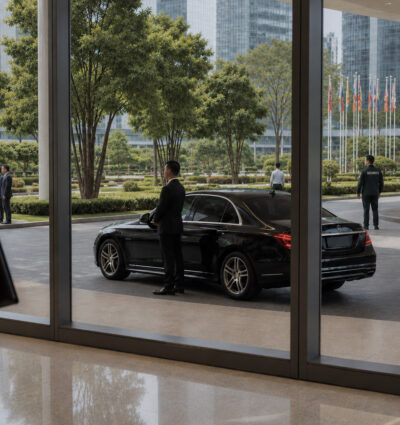
Once this happens, individual point-to-point transfers become harder to manage efficiently. Keeping the same vehicle and chauffeur available makes more sense when meetings overrun, addresses change, or the next departure time remains uncertain.
Planning the executive’s schedule around the Meetings
Security preparations are already an important part of the planning for the Annual Meetings, with dedicated coordination between the IMF, Thailand’s Ministry of Finance, the Bank of Thailand, and other authorities ahead of October.
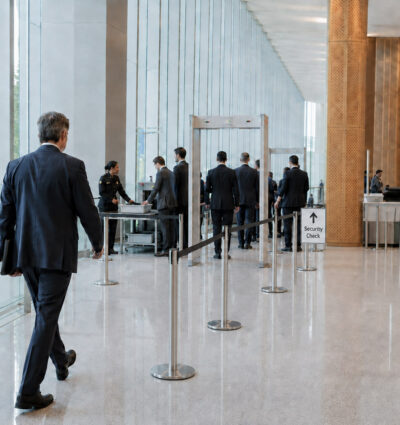
The procedures at QSNCC have a direct effect on scheduling. All participants must be accredited, badges are checked at perimeter checkpoints and scanned again before entry to the main building, and everyone entering the venue will undergo magnetometer screening. Organizers advise participants to allow additional time and recommend keeping identification badges out of sight when outside the security perimeter.
A 9:00 a.m. appointment therefore needs to be planned backwards from the meeting room rather than from the vehicle drop-off. Time for the security perimeter, screening, and movement through QSNCC has to sit between the two.
Departures require similar margin, particularly around the end of major sessions when large numbers of delegates are moving through controlled areas at the same time. A chauffeur waiting nearby provides greater flexibility when sessions run late or departures take longer than expected.
The vehicle may become part of the working day
During the Annual Meetings, senior executives may spend a significant amount of time moving between QSNCC, hotels, offices, and evening events. That makes vehicle choice relevant for more than simply matching the number of passengers.
Luggage and personal belongings may need to remain in the vehicle between appointments, while a schedule extending across most of the day places greater importance on space, comfort, and privacy.
The way the service is booked matters too. A series of separate transfers works best when departure times and addresses are fixed. During a week of bilateral meetings, receptions, and changing agendas, keeping the same chauffeur and vehicle available for several hours makes schedule changes easier to manage without having to arrange a new pickup each time.
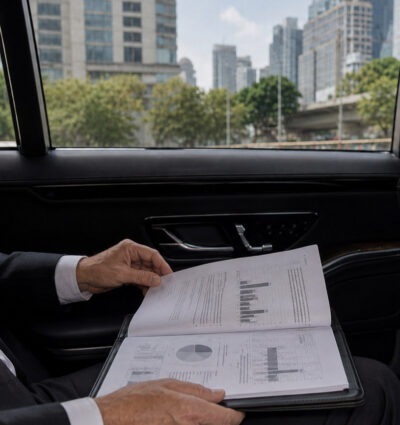
That continuity can also give the executive a more useful period between appointments. In a densely scheduled week, the drive may be one of the few moments available to make a call, review notes, or prepare for the next meeting.
Commercial and private aviation
Bangkok’s international connectivity means participants will arrive from every major financial region. Commercial arrivals are generally easier to model around published schedules, baggage reclaim, and terminal procedures. Private aviation involves a different set of timings, including FBO arrangements, luggage, and changes made shortly before departure.
That difference matters most when the first meeting follows soon after landing. The scheduled arrival time does not tell a Travel Manager when the passenger will actually be ready to leave the airport.
Flight details, terminal or FBO information, vehicle requirements, passenger contacts, and the first destination should therefore be planned together. This is particularly important for private aviation, where the ground arrangements need to match the flexibility of the flight itself.
Planning beyond the official program
By the time the 2026 Annual Meetings begin, airport arrangements, hotel location, QSNCC access, off-site appointments, vehicle requirements, communication contacts, and security screening times should already form part of the same travel plan.
Official transportation will support the core event, but many senior executives will spend a substantial part of the week outside that network. Coordinating several travelers becomes considerably more demanding when their schedules and access requirements differ.
Frequently asked questions about the 2026 IMF-World Bank Annual Meetings in Bangkok
Where will the 2026 IMF-World Bank Annual Meetings take place?
The IMF and World Bank Group Annual Meetings will take place in Bangkok from October 12 to 18, 2026, with the Queen Sirikit National Convention Center serving as the main venue.
What transportation will be available for registered participants?
Registered participants will have access to official shuttle services between the airport, designated hotels, and the Meetings campus. Those services do not cover every off-site appointment, private meeting, dinner, or alternative hotel an executive may use during the week.
What security procedures should attendees expect at QSNCC?
Participants should allow additional time for accreditation checks, badge scanning, and magnetometer screening. The exact margin will depend on the time of day and the volume of delegates entering or leaving the venue.
When does a chauffeur-by-the-hour service make sense during the Meetings?
A chauffeur-by-the-hour service can be particularly useful when the executive has several appointments outside QSNCC or when departure times change during the day. Keeping the same vehicle and chauffeur available reduces the need to arrange a new pickup every time the schedule shifts.
How will the Annual Meetings affect traffic in Bangkok?
The Thai government has already announced special working arrangements and a public holiday during the week, partly to reduce congestion and support security preparations. Traffic around QSNCC and routes used by official delegations may still be affected by event-related movement and access controls.