By Fransheska De Moya, Onboarding Specialist
The final weeks of the year have always required early planning, but booking patterns for 2026 suggest that luxury travelers are planning further ahead. Data presented by Virtuoso in August showed that bookings for the 2026 festive period were running 65% ahead of the comparable period last year, with clients booking earlier to secure their preferred options.
By October, many travelers have already decided where they will spend the end of the year, with some of the most sought-after hotels, villas, restaurants, and experiences already confirmed. For Travel Advisors, this means that much of the planning is happening well before December.
Ground transportation is often left until later. Unlike a particular suite or restaurant table, a vehicle can seem relatively easy to arrange closer to the date. But during the final days of December, availability, road restrictions, event access, and the specific requirements of each traveling party can narrow the options considerably.
The end-of-year rush is already taking shape
Virtuoso defines the festive travel period as December 15 through January 7. Its August data shows stronger demand for 2026 alongside more ambitious travel plans, with 60% of clients showing greater interest in bucket-list or once-in-a-lifetime trips.
Unlike travel at other times of the year, there is little flexibility around the dates themselves. Demand becomes concentrated into a short period, with many travelers looking for the same flights, accommodation, restaurant reservations, and experiences.
Not to mention that end-of-year itineraries rarely remain exactly as they were first booked. As December approaches, new plans and changes to existing reservations alter where travelers need to be and when. Transportation arranged later, therefore, needs to reflect the itinerary as it has evolved.
Five destinations, five different travel patterns
There is no single model for end-of-year travel. An itinerary built around a major city has little in common with a longer resort stay, while two destinations known for large-scale celebrations can still require very different transport arrangements.
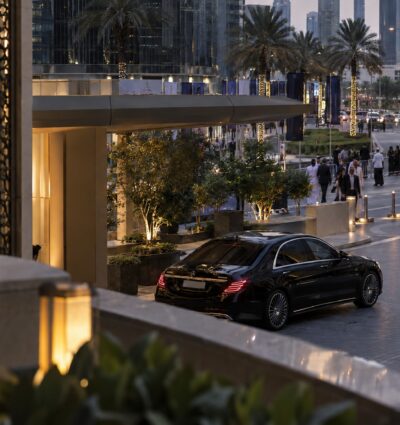
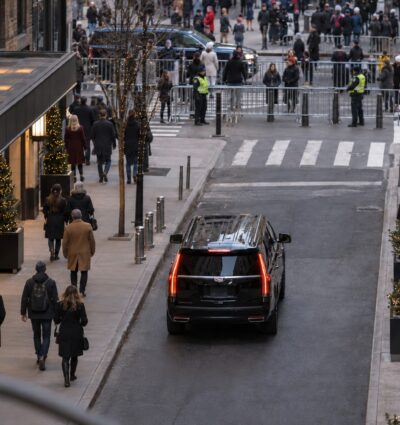
- New York remains a popular choice for the end of the year, when visitors add to the city’s already heavy traffic. New Year’s Eve brings additional street closures and access restrictions, particularly around Times Square, which must be considered when planning movements across Manhattan.
- Dubai requires particular attention on December 31. Celebrations take place across the city, while Downtown is subject to specific traffic arrangements. During the previous New Year’s Eve celebration, road closures began in phases from 4:00 p.m., making ordinary journey-time estimates a poor reference.
- Vienna attracts travelers who plan several days around the end of the year. Many reservations have fixed starting times, making realistic journey times important throughout the stay.
- Cabo San Lucas often means a longer stay at a resort or private villa, with more luggage than travelers would typically carry on a shorter trip. The drive from Los Cabos International Airport also makes the arrival transfer an important part of the journey. Passenger and luggage numbers should both be considered when selecting the vehicle.
- Sydney requires specific planning around December 31. Road closures begin around some waterfront areas as early as December 30, followed by extensive restrictions across the city center the following day. The Sydney Harbour Bridge itself closes in both directions around midnight, and where travelers plan to spend the evening affects how they get there and how they return afterwards.
These differences are worth considering before the itinerary is finalized. The arrangements that work for a stay in Cabo San Lucas may be very different from those required for a major year-end celebration in Dubai or Sydney.
Festive travel changes the usual transport assumptions
The final days of December require a different approach to ground transportation. Journey times become less predictable, longer stays influence vehicle choices, and some itineraries need more flexibility than what a series of pre-booked transfers can provide.
Distance becomes a poor measure of journey time
On December 31, journey times can become difficult to predict as road closures and controlled areas come into effect. A route that looks straightforward earlier in the day may no longer be available a few hours later, and pickup or drop-off points can shift accordingly.
A restaurant three kilometers from a hotel may therefore require more planning than an airport considerably farther away. Access may be restricted, or the vehicle may need to drop off and collect passengers farther from the venue.
Holiday luggage changes the vehicle choice
Passenger numbers alone are not always a reliable basis for choosing a vehicle. A couple traveling for a short business trip and a couple spending ten days away occupy the same number of seats but arrive with very different amounts of luggage.
The difference becomes greater with longer stays and larger parties. A vehicle that comfortably accommodates the passengers may not have sufficient space for everything they are carrying, so luggage should be considered when the vehicle is selected rather than after the booking has been made.

Transfers and hourly service solve different problems
Not every end-of-year itinerary requires a chauffeur to remain available throughout the day. Fixed movements with known departure times can often be handled efficiently as individual transfers.
Other days, however, are less predictable. Plans may change, or the time guests leave a New Year’s Eve event may be difficult to determine in advance. In those circumstances, keeping the same chauffeur and vehicle available removes the need to coordinate another pickup each time the itinerary changes.
A single trip can therefore justify both approaches. Airport arrivals and departures may work naturally as transfers, while December 31 or another particularly active day may be better suited to an hourly service.
Planning early leaves more room to change later
By October, an end-of-year itinerary does not need to be final for many of its transportation requirements to be clear. Once flights and accommodation are confirmed, the main ground arrangements begin to take shape, while New Year’s Eve plans or other fixed reservations show where timing and access may require closer attention.
Other details can remain open. A restaurant reservation may move or an afternoon plan may be added, but the need for a vehicle capable of carrying six passengers and their luggage is unlikely to disappear.
Confirming those requirements early still leaves room for the itinerary to develop. By the time the busiest days arrive, flexibility often depends on the choices that were secured earlier.