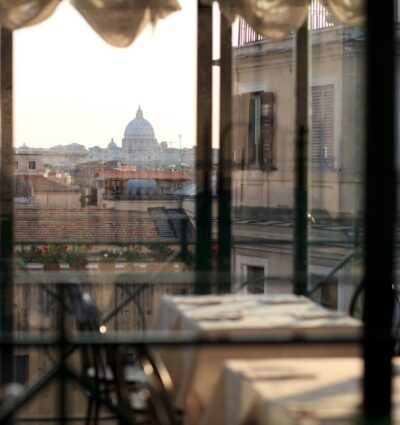
Rome is a city taken in through every sense. The sound of scooters appearing out of nowhere, the aroma of freshly brewed coffee drifting from a bar, the uneven cobblestones underfoot, and the taste of pasta prepared from the same recipe for three generations.
Rome operates on its own logic: camera-monitored limited traffic zones, constant pedestrian flow, and narrow streets that conceal some of Italy’s finest restaurants. To truly experience Rome at a gastronomic level requires moving between neighborhoods, anticipating schedules, and often knowing where the trattoria is that does not appear in any guidebook.
What follows is a curated culinary route, from the first espresso to the last glass of wine.
Private chauffeur in Rome, or the smartest way to discover the city
Traveling by private vehicle in Rome is not an indulgence. It is the smartest decision for anyone who wants to make the most of every hour of the day.
Rome has a unique pace. Scooters appear from every direction, pedestrians cross without looking, and traffic flows in ways that only locals truly understand. With a private chauffeur, moving between neighborhoods becomes straightforward, without the distraction of navigation or the challenge of parking.
Rome’s limited traffic zones (ZTL) in the Centro Storico, Trastevere, and the Tridente are monitored by cameras that automatically record license plates, often resulting in fines issued long after the moment has passed. A local chauffeur knows these perimeters and schedules in detail, allowing guests to reach the heart of each neighborhood without detours or complications.
Between restaurants and neighborhoods, the vehicle becomes a private space: quiet, climate-controlled, where lunch conversations continue, and the city is observed from within without the stress of managing it. Few destinations offer so much to see through a car window. With that in mind, the route that follows takes on a different meaning. Instead of a checklist of places to visit, it becomes a full day in one of the most fascinating cities in the world.
Morning: the coffee that changes everything
Romans do not sit down for breakfast. They step up to the bar, order an espresso, drink it in two minutes, and move on with their day. It is a ritual with no direct translation in any other culture, and the only way to understand it is to experience it firsthand.
Sant Eustachio Il Caffè, steps from the Pantheon, has been serving what many consider the best coffee in Rome since 1938. The recipe is famously guarded. The sugar is integrated during preparation rather than added afterward, resulting in an espresso that is creamy, perfectly balanced, and notably free of the sharp acidity found in less careful extractions. Customers arriving before 9:00 a.m. will find it almost quiet. An hour later, the line often stretches out the door and into the street.
From there, the route heads south toward Testaccio Market, one of Rome’s most authentic culinary neighborhoods. It is a place that is not designed for tourists, as there are no souvenir stalls or inflated prices. This is where Romans like to shop: Lazio cheeses with protected designation of origin, cured guanciale for carbonara, seasonal vegetables that change weekly, and street food prepared on the spot. It is also where travelers begin to understand Roman cuisine at its core: exceptional products, handled with confidence and honesty.
The drive between the historic center and Testaccio early in the morning, when Rome has not fully awakened, is one of the best moments to see the city from the vehicle. The Tiber on one side, the Aventine Hill in the distance, and nearly empty streets all around.
Lunch at Rome’s neighborhood trattorias
There is a common misconception about Roman trattorias: that they are simple, unpretentious options for those not seeking fine dining. The reality is that the best trattorias in Rome are top-tier culinary destinations. They just do not advertise it.
Da Enzo al 29 in Trastevere is a perfect example. A small dining room, bare wooden tables, and a handwritten menu that changes with the market. Here, cacio e pepe and amatriciana are prepared exactly as tradition requires: no cream, the proper Pecorino, and the patience each dish deserves. There is no extensive wine list. There is house wine, and it is enough. Reservations are typically made several days in advance.
For those who prefer something between a restaurant and a wine bar, Roscioli Salumeria con Cucina near Campo de Fiori offers a different reference point. Active since 1824, it combines carefully selected cured meats with classic Roman pastas and a wine cellar that includes more than 2,500 labels. It is the kind of place Italian chefs visit when they are in Rome, and the waiting list reflects that reputation.
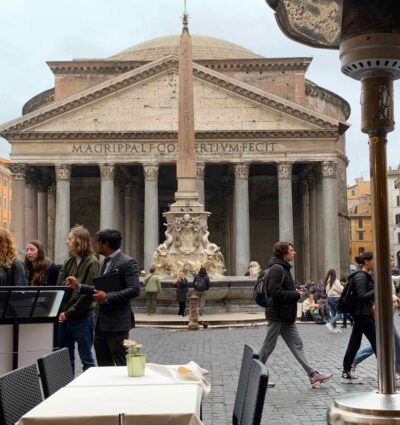
And for guests who wish to dine just steps from the Pantheon without falling into the predictable options surrounding the monument, Armando al Pantheon remains one of the area’s last truly authentic trattorias. Despite the location, its quality continues to attract locals.
Trastevere, Campo de Fiori, and the area around the Pantheon are three distinct neighborhoods, each with its own access restrictions and identity. The passenger chooses according to the day and reservation availability, and the chauffeur handles the rest.
Afternoon: the slow tempo of Rome
Between one and four in the afternoon, Rome slows down and briefly belongs to its residents. Visitors retreat for a pause, many kitchens close, and the streets grow noticeably calmer. It is the ideal moment to move through the city at an unforced pace. Prati, the residential district stretching alongside the Vatican, is Rome without tourist filters. There you find pastry shops with decades of history and neighborhood stores unchanged for generations. It rarely features in guidebooks, which is precisely why it is worth experiencing.
Before returning to the vehicle, a visit to Gelateria del Teatro near Campo de Fiori completes the afternoon. It does not have a flashy storefront and does not need advertising. Here the ingredients change with the seasons: figs and honey in fall, strawberries and basil in spring, and pistachios from Bronte year-round. It is the kind of address one discovers only when guided by someone who knows the city intimately. And a local chauffeur with genuine knowledge of Rome opens the right doors at the right moment.
Fine dining with views over Rome
If lunch is best enjoyed in a trattoria, dinner reveals a different Rome, one of Michelin-starred dining rooms, reference wine lists, and views that make the moment everlasting.
La Pergola, at the Rome Cavalieri on Monte Mario Hill, remains the city’s only three-Michelin-starred restaurant. Chef Heinz Beck has spent decades building a cuisine of absolute Italian prestige. From its terrace, the panorama over Rome and the Vatican at dusk is extraordinary. As the light fades and the city begins to glow, the setting becomes part of the experience. Some moments are better lived than described.
For those who prefer dining beside one of the most iconic monuments in the world, Aroma at Palazzo Manfredi offers what few cities can: a table overlooking the illuminated Colosseum.
And for those who wish to end the day above the rooftops of Rome, Imàgo on the top floor of Hotel Hassler at the Spanish Steps offers a panoramic view over the entire city. Chef Andrea Antonini specializes in contemporary Italian cuisine, earning one Michelin star.
After an evening with wine pairings at any of these three restaurants, the vehicle is waiting at the door. No searching for a taxi at midnight in a city where they are scarce. The night ends as it began, without friction.

Drivania in Rome: certainty in Italy’s most unpredictable city
Designing a day like the one described requires more than securing reservations at restaurants. It requires knowing Rome: its neighborhoods, schedules, restrictions, shortcuts, and patterns. Knowing that the ZTL in Trastevere operates under different hours than the Centro Storico and that at seven in the evening certain avenues become congested for forty minutes and must be anticipated before departure.
Drivania chauffeurs in Rome are local. They do not drive through the city with GPS alone; they know it. That translates into something concrete for the customer: every reservation is reached on time, every neighborhood is accessed without complications, and every moment between restaurants becomes part of the experience.
A culinary journey through Rome can be experienced in many ways. Experiencing it without the city’s complexity intruding on the moment is what transforms it into something exceptional, and that is where a private chauffeur makes all the difference.